
This Treatment Could Help Stop the Progression of Your Gum Disease
Innovera
- Nov 25, 2025
- 3 min read
Some words pack-a-punch. Or they could cause you to feel intimidated.
When your dentist informs you that you have gum disease you might also have a secondary reaction to the recommended treatment known as scaling and root planing.
Let's delve into the gum disease condition and then relieve some of the tension you might feel about scaling and root planing as the solution.
What is gum disease?
The condition is begins with an accumulation of plaque on your teeth. The sticky film of bacteria builds up over time if it's not removed by proper brushing and flossing and routine teeth cleanings.
Worse, the plaque hardens into tartar. When this occurs, bacterial growth is enhanced leading to gum inflammation and the first phase of gum disease known as gingivitis.
The good news is that - with recommended dental care - gingivitis is a reversible condition. But untreated or ignored gingivitis can progress into periodontitis - a more severe form of gum disease.
As periodontitis sets in, it begins to damage the soft tissue and bone that support your teeth. You might begin to notice a few symptomatic conditions such as:
- Gum recession
- Loose teeth
- Tooth loss
Untreated gum disease has also been linked to other systemic health conditions including:
- Heart disease
- Diabetes
- Respiratory infections
Unlike gingivitis, progressive gum disease (periodontitis) is not reversible. Even so, it can be treated - which brings us to the earlier mentioned procedure.
How scaling and root planing treats gum disease
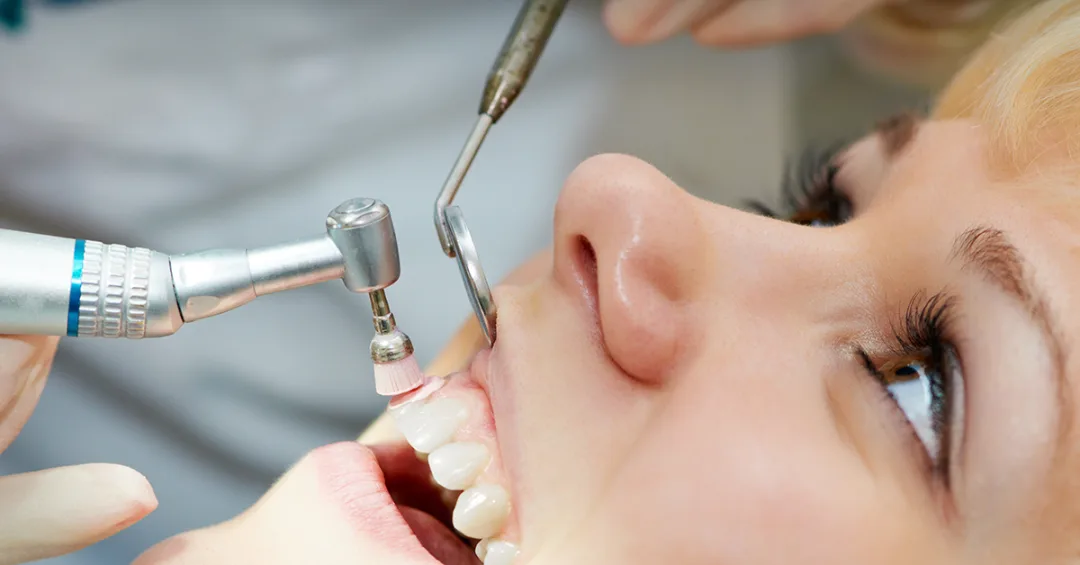
The procedure is non-surgical and primarily targets your gum disease by removing plaque and tartar build-up beneath your gum line.
Here's how the treatment works end-to-end:
1-The scaling procedure
Your dentist or dental hygienist uses specialized tools to remove the plaque and tartar from your tooth surfaces. Their instruments also reach below your gum line.
The goal of scaling is to eliminate bacterial build-up in the plaque that's responsible for your gums being inflamed and infected.
2-The root planing procedure
This process follows scaling and reaches the root portion of your teeth. Your tooth roots are smoothed to reduce the rough areas where bacterial typically accumulate.
Further build-up is prevented so your gum tissue can properly reattach to your teeth.
The benefits you can expect from scaling and root planing
Gum disease progression can be stopped
The removal of plaque and tartar helps prevent further damage to your gums and underlying bone tissue.
Tooth loss can be prevented
Gum disease is the leading cause of adult tooth loss. The scaling and root planing procedure enables your compromised teeth to be saved by eliminating the aggressive infection and promoting gum reattachment.
Improved gum health
Post-treatment results include significant improvement to the health of your gums, reduced tissue inflammation, and tighter gum attachment.
Overall health is enhanced
Gum disease treatment targets the source of your condition but its benefits also extend to your general health.
Treating the issues associated with oral bacteria and inflammation also reduce your risk of developing other systemic conditions associated with your oral health.
Cost-effective by comparison
Surgical procedures are more invasive and costly. Therefore, scaling and root planing is a more cost-effective alternative for treating and managing your gum disease.
Consult with your dentist and insurance carrier to determine if scaling and root planing is covered by your insurance.
Quick Actions
Related Articles

Stay Updated
Get the latest articles delivered to your inbox.